- 2365 Energy Drive Bowmanville , ON Canada, L1C 6Z9
- (905) 697-2020

Choosing the right plastic pipe and fittings begins with matching the material to the fluid, temperature, pressure, and environment—such as PVC, CPVC, clear PVC, polypropylene, polyethylene, acrylic or polycarbonate, plus the correct schedule for pressure requirements. Proper compatibility also requires matching nominal pipe and fitting sizes and selecting appropriate fittings for the installation method. Finally, always verify local and industry codes and certifications to ensure safety, compliance, and long-term performance.
When choosing plastic pipe & fittings consider these main factors in order to find the right setup for each application.
Confirm the fluids being used will be compatible with the pipe & fittings material being considered. Different pipe & fitting materials are designed for different fluids.
Will the pipe & fittings be exposed to the outdoors, or buried underground? If so, consider factors such as UV resistance, resistance to temperature changes, and weathering.
Calculate the maximum pressure of the application and ensure the pipe & fitting material and thickness can withstand that pressure.
Take into account the temperature range of the applications and confirm that the materials of the pipe & fittings being used are compatible with that range.
Consider the industry regulations where the pipe & fittings will be used. Ensure the materials, sizes, thickness, etc. all follow the standards and regulations.
Take into consideration if the pipe & fittings will need to be connected, threaded, transitioned to hose or tubing, glued, or welded. Ensure the correct pipe & fittings are chosen for those applications.
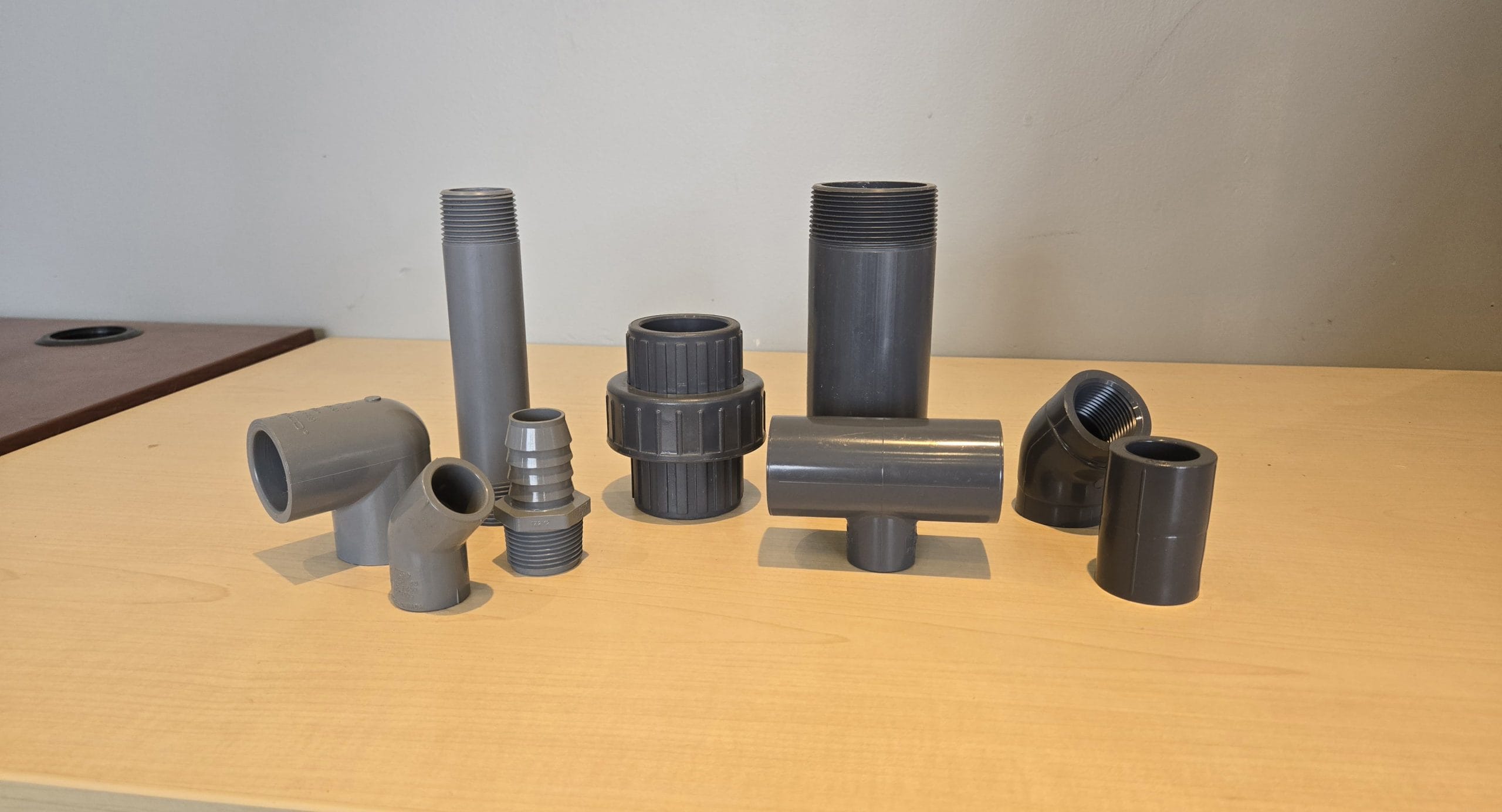
Use these additional factors to ensure the plastic pipe & fittings being used are the optimal choice for the application.
The different materials of the pipe & fittings come in different colours and transparencies. Take into consideration if the application has appearance requirements and ensure the materials being used meet those.
Plastic pipes & fittings are available in different thicknesses. Such as duct, schedule 40, and schedule 80. Ensure the right thickness is being used for the application.
Plastic pipe & fittings are available in a wide variety of sizes. Make sure the size being used is the right size to maintain the applications' pressure and flow requirements.
Will the pipe & fittings be connected to a pump, vacuum, fan, etc.? Take into consider what accessories will be used in the application and ensure the pipe & fittings being used are compatible.
A chart showing the information and compatibilities of different plastic materials with different chemical use.
A chart showing information and compatibilities of different plastic materials at continuous temperature use.
A catalog showing the information and vast line of JACO plastic fittings.
PVC duct and standard PVC pipe are designed for different purposes and are not interchangeable. PVC duct has thinner walls and is intended for moving air, fumes, or light exhaust in low-pressure systems, while standard PVC pipe has thicker walls, is pressure-rated, and is designed to carry liquids like water. The key differences are wall thickness, pressure rating, and application—PVC duct for air movement and PVC pipe for pressurized liquid systems.
Plastic pipe is used across a wide range of residential, commercial, industrial, and agricultural applications due to its corrosion resistance, durability, light weight, and cost-effectiveness. It is commonly used to transport drinking water, wastewater, chemicals, gas, and pool water, as well as for irrigation, radiant heating and cooling, electrical conduit, and HVAC systems. Different materials—such as PVC for drainage and conduit, polyethylene for gas and high-pressure service, CPVC for higher-temperature water, and polypropylene for chemical and industrial processing.
Acrylic and polycarbonate pipes and fully transparent. Clear PVC pipe is translucent. It is see through but with a slight bluish tint.
Yes, Ecoplas Industrial fabricates with plastic pipes. We do supply our clients with plastic pipes & fittings as is or we use them to fabricate custom item for them as well. Common fabricated products that use plastic pipes & fittings are tanks, columns, fume scrubbers, vacuum stations, and PVC faucets.
Plastic pipes are frequently chosen over metal because they offer a cost-effective, durable, and easy-to-install solution for modern plumbing and fluid handling systems. Materials such as PVC, CPVC, polypropylene and polyethelyne resist corrosion, rust, and mineral buildup, helping maintain water quality while extending service life, and their lightweight nature allows for faster installation without soldering. Plastic pipes also operate more quietly, reduce heat loss and condensation, and are less prone to freeze-bursting than rigid metal pipes, making them ideal for water supply, drainage, irrigation, and chemical applications.
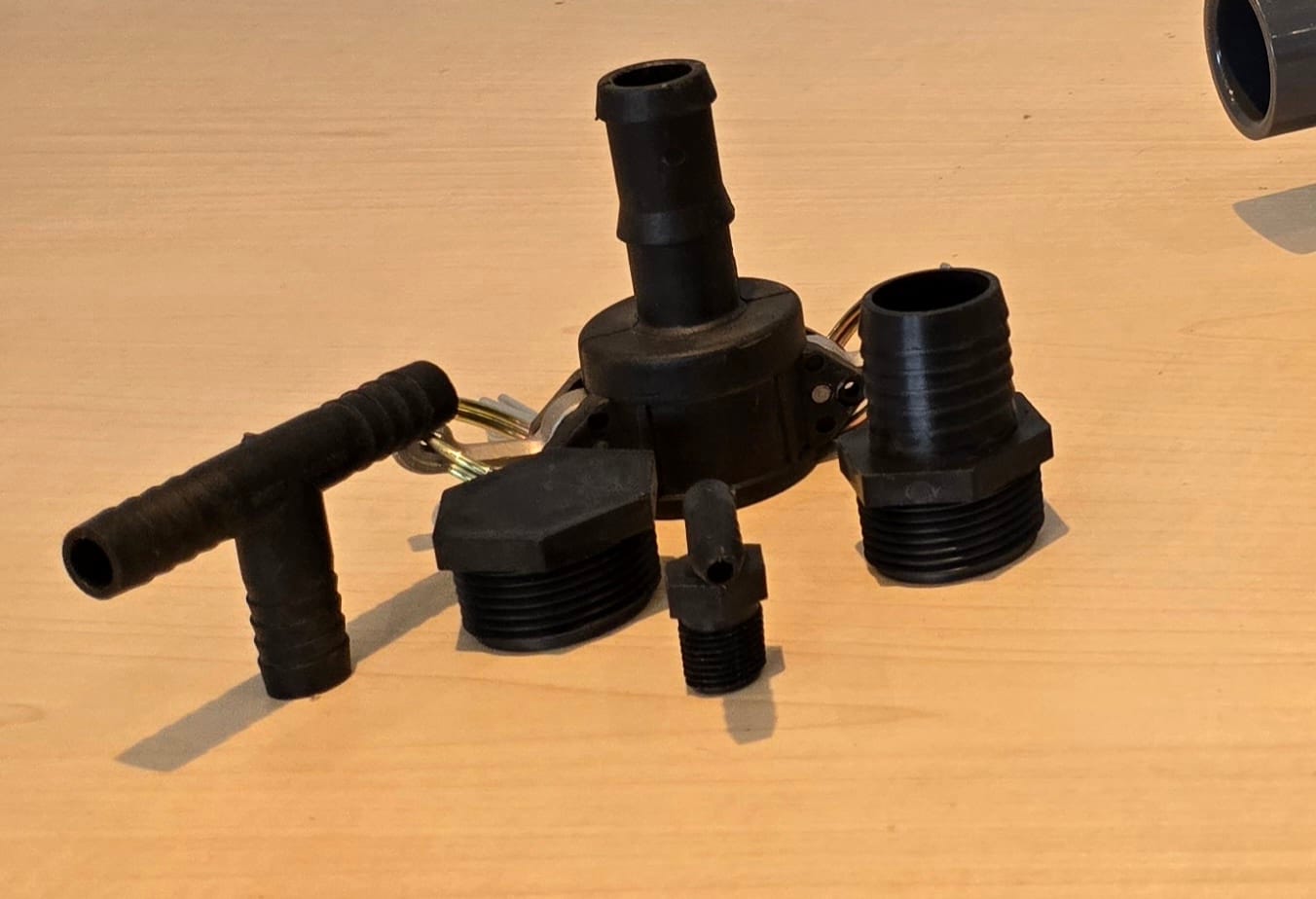
Reach out to us and one of our technical sales representatives will answer any of your questions.